Activated carbon in water filtration - effect, areas of application and scientific principles

What is activated charcoal?

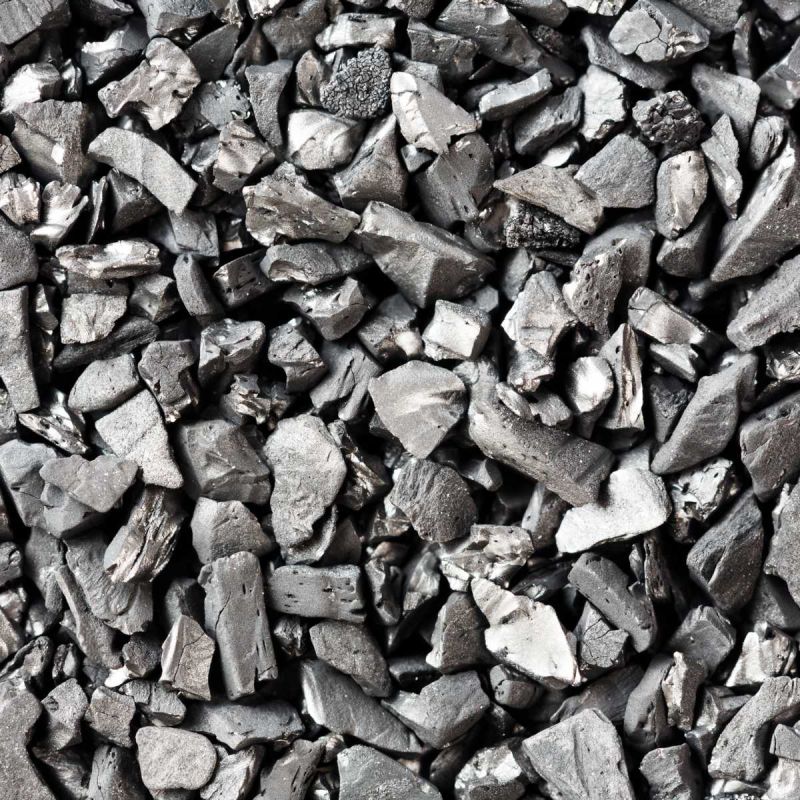
Activated carbon is an extremely fine-grained, highly porous carbon with a sponge-like structure and an impressively large inner surface area. Thanks to these special properties, it is ideal for adsorption – i.e. binding unwanted substances to its surface.

Through this process, activated carbon reliably removes heavy metals such as lead, copper, zinc, nickel or cadmium from liquids. It filters out chlorine, pesticides, pharmaceutical residues, hormones and colorants, flavors and odors just as efficiently.

This is why activated carbon is not only used in drinking and waste water treatment, but also in areas such as medicine, cosmetics, the chemical industry and in air conditioning and ventilation technology – wherever thorough purification of air or liquids is required.

Production of activated carbon - from natural material to high-performance filter

Various natural materials containing carbon are used in the production of activated carbon – including wood, peat, bone, lignite, coal and coconut shells.

Acala deliberately uses high-tech activated carbon made from coconut shells, as this material has particularly fine pores and excellent filtering properties.

In the first step, the starting material is carbonized at around 800 °C – i.e. converted into its solid carbon components in the absence of oxygen. This is followed by what is known as activation: countless micropores are created through targeted treatment with hot steam or carbon dioxide. This creates an enormously large inner surface area – the basis for the extraordinary adsorption capacity of activated carbon. Hence its name.

An astonishing amount of space in the smallest of spaces - the gigantic inner surface of activated carbon

One gram of unprocessed charcoal has an internal surface area of around 10 m². If the carbon is activated – for example from coconut shells – a single gram of activated carbon can develop an internal surface area of over 1,000 m².

To illustrate: if you could completely unfold four to five grams of activated charcoal (about a teaspoonful), its inner surface would theoretically be enough to cover an entire soccer field.

How activated carbon is activated

Activation takes place at high temperatures between 700 and 1,000 °C, usually using steam or carbon dioxide – occasionally also with air. During this process, some of the carbon is converted to CO₂. This creates additional pores, which significantly increases the inner surface area of the coal.

There are two basic methods: chemical activation and so-called gas activation.

In the chemical method, the uncharred starting material is mixed with certain chemicals – usually with dehydrating substances such as zinc chloride or phosphoric acid – and then treated at temperatures of 500 to 900 °C.

Gas activation, on the other hand, uses already carbonized materials such as charcoal, peat coke, coconut shell coke or hard coal and lignite. These are specifically activated with steam or CO₂ to form the pore structure.

Different types of activated carbon

There are basically three main forms of activated carbon: powdered activated carbon, granulated carbon (also known as granular carbon) and molded carbon.

Granular carbon has an average particle size of around 1 mm, whereas the particle size of powdered activated carbon is only around 0.1 mm. Interestingly, despite the different particle sizes, both variants offer a comparable internal surface area.

Molded carbon, on the other hand, is produced by grinding the carbonized material, which is then activated, mixed with binding agents and then pressed or sintered into the desired shapes.

One disadvantage of this variant is that the added adhesive can impede the natural flow of water – which is why a certain amount of water pressure is usually required when using molded carbon to ensure effective filtration.

Molded/glued carbon

It is immensely more efficient to use grain charcoal, where gravity alone is sufficient to cause the flow.
This gives the water the opportunity to develop naturally.
This type of activated carbon is used in Acala water filters.

In addition, the size of the particles can influence the rate of adsorption,
but not the quantity adsorbed, as this is only dependent on the inner surface.

According to this finding, grain charcoal is considered more efficient for water treatment than powder.

Structure and arrangement of atoms

The activation process causes activated carbon to develop an irregular, non-ordered crystalline structure of carbon atoms. This special arrangement ensures a pronounced porosity – unwanted substances from the water can be efficiently bound in the resulting cavities.

The pores are divided into four categories depending on their size:
macropores (>50 nm), mesopores (2-50 nm), micropores (1-2 nm) and minimicropores (<1 nm).

Micropores in particular are ideal for removing the smallest molecules from water. Grain charcoal, which is obtained from coconut shells, has a particularly large inner surface area and a high proportion of micropores – properties that make it particularly suitable for water filtration.

*(1 nm (nanometer) is one millionth of a millimeter)

Binding capacity and filter performance of activated carbon

How well a substance is absorbed by activated carbon depends on various factors – such as the size of the molecule, its solubility in water, its attraction to the activated carbon and the pH value of the water, which can also influence these properties.

Activated carbon is particularly effective at removing organic compounds. These include trihalomethanes, pesticide residues or hormone-like substances – they have a strong affinity for activated carbon and can therefore be bound very well and removed from the water.

Is activated charcoal effective against microplastics and nanoplastics in water?

Plastic particles can be divided into different categories according to their size. Although they are generally known as “microplastics”, there are more specific terms:
Mesoplastics (500 µm to 5 mm), microplastics (50 µm to 500 µm) and nanoplastics, which are smaller than 50 µm – with some definitions even drawing the line at 100 nm. Despite the name, nanoplastics are larger than 1 nm.

The formation of nanoplastics from microplastics is primarily a time-dependent process. According to estimates, it can take around 320 years for a single 1 mm microplastic particle to decompose into a 100 nm nanoplastic particle.

A research group also investigated the behavior of 30 nm polystyrene particles (a type of plastic) in seawater and found that they coalesced into larger aggregates of around 1000 nm after just 16 minutes. This indicates that even nanoplastics tend to clump together in water and thus reach a size that is closer to that of microplastics.

And now to the question: Can activated charcoal filter microplastics?
The answer is clearly yes.

Activated carbon contains so-called nanopores – tiny cavities with a diameter of less than 2 nm. These pores are small enough to reliably retain even very fine particles such as microplastics or mesoplastics. This also applies to nanoplastics in almost all cases. Only extremely small particles below the 2 nm limit could pass through the pores under certain circumstances – although this is very rare.

In addition, plastic does not dissolve in water, but is hydrophobic – it avoids water and prefers to adhere to organic surfaces such as activated carbon. As plastic is of organic origin, it also has a natural tendency to bind to the carbon structure of the activated carbon.

Conclusion: Activated carbon is able to remove the vast majority of plastic particles from the water – and is therefore an effective protection against micro- and nanoplastics in your drinking water.

*1µm = micrometer) is one thousandth of a millimeter
**(1 nm (nanometer) is one millionth of a millimeter)

Why is plastic an organic material?

In chemical terms, organic molecules are complex compounds that contain carbon in combination with other elements. Plastics consist of so-called polymers, i.e. chain-like molecular structures. The organic content in plastic refers to the carbon it contains, which – depending on the type of plastic – can be combined with hydrogen, oxygen, nitrogen or sulphur.

Is activated charcoal harmful to health?

There is no need to worry if your drinking water comes into contact with activated charcoal. Activated charcoal is a purely natural product – especially when it is obtained from sustainable raw materials such as coconut shells.

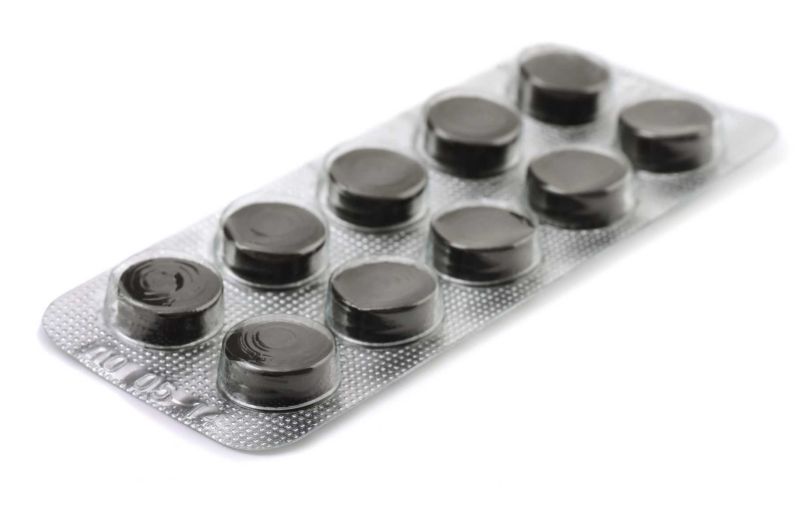
Incidentally, the same type of activated charcoal is also used in medicine – for example by GPs for gastrointestinal complaints such as diarrhea.

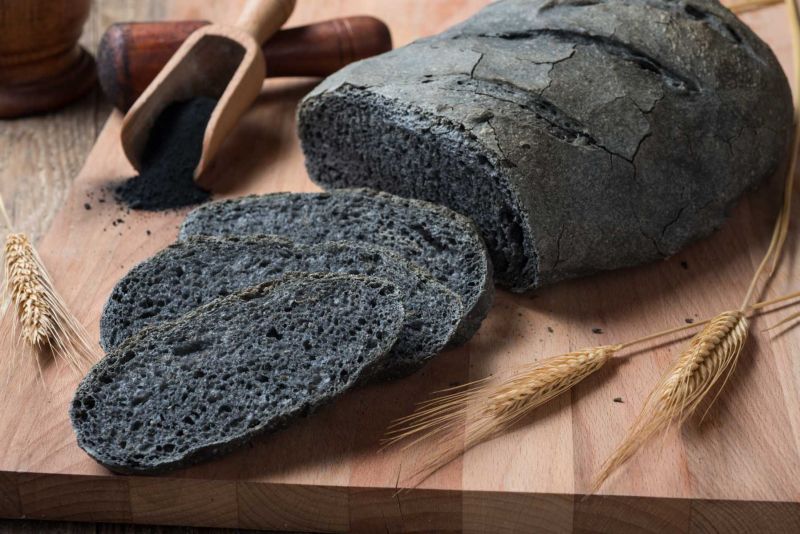
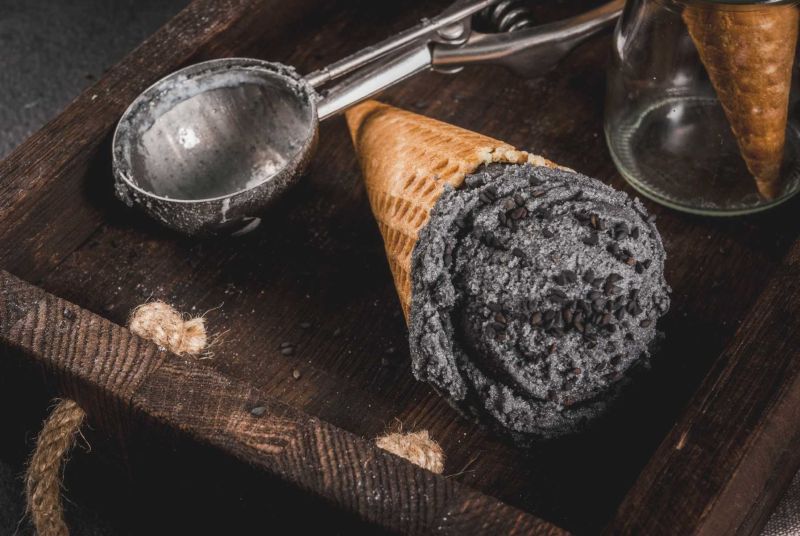
Activated charcoal is even used in food – for example, for the natural coloring of ice cream or confectionery. It is also valued in cosmetics: Its cleansing properties make it a popular active ingredient for skin care products.

In this way, activated carbon not only helps to purify water, but also supports your health – and helps to protect the environment.

Historical facts:

The current use of activated charcoal in its highly developed form is still relatively recent. Nevertheless, the history of charcoal use goes back a long way – even in ancient times, cultures such as the Egyptians, Indians, Greeks and Romans used charcoal in a variety of ways.

In Egypt, charcoal was used to embalm the deceased or to seal the hulls of ships, among other things. The ancient Greeks, on the other hand, used it as an antidote for food poisoning. And in India, the first use for purifying drinking water can be traced back to a Sanskrit text from around 200 BC.

Charcoal also played a role in the age of Christopher Columbus: sailors discovered that water remained drinkable for longer on long voyages if the wooden barrels were slightly charred on the inside.

The first scientifically documented study on the effect of activated charcoal was carried out by the Swedish chemist Carl Wilhelm Scheele and published at the end of the 18th century. Its industrial use finally began at the beginning of the 20th century – and has grown steadily ever since.

Shopping cart0
There are no products in the cart!
Continue shopping
0